
Calatheas are the needy little sisters of the plant world. Not enough moisture? I die. Not filtered water? I die. You breathed on me? I die.

I’ve always had trouble with growing calatheas, which always made me very sad because when thriving they are some of the most stunning house plants around. They come in a symphony of colors and patterns, and even more striking, they move. Calatheas fall into the same family as prayer plants, marantaceae, and marantas are known and loved for their folding abilities.
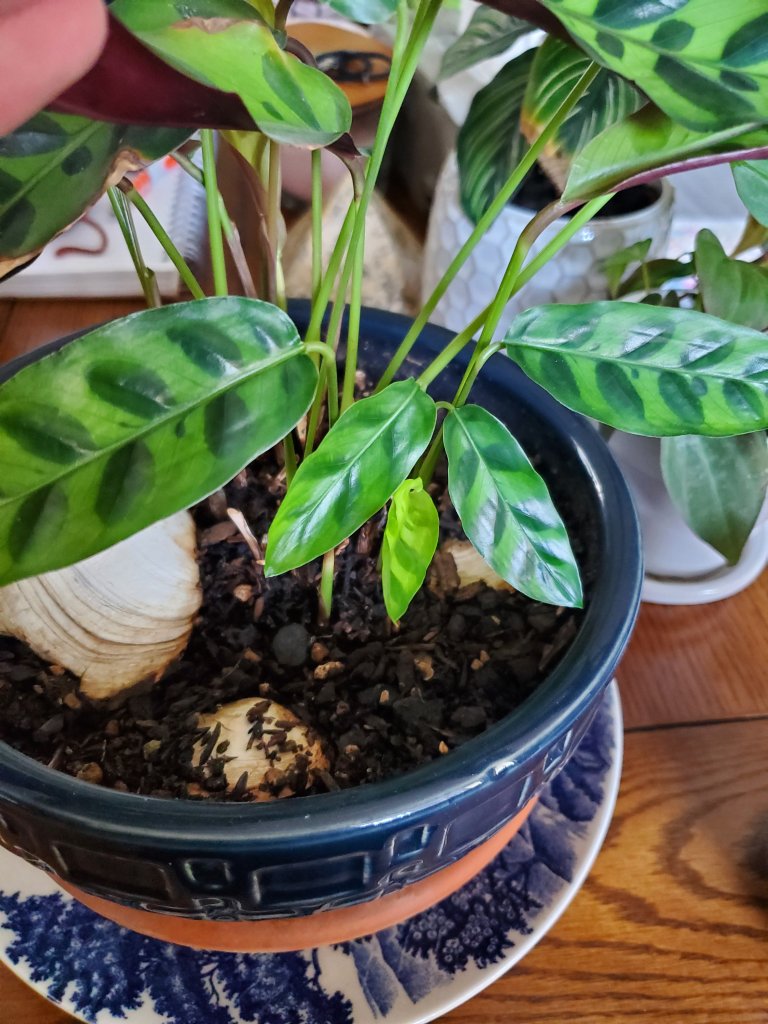
Even with all the trouble I’ve had getting calatheas to live under my plant parentage, I have thus far collected three of them. The only one that noticeably moves is the calathea lancifolia, commonly known as the rattlesnake plant. It opens up wide and spreads its leaves like stretching one’s arms in the morning, and stays that way most of the day; my guess is that this offers more surface area to collect light and rain water should there be any, but I am no botanist. At night the leaves tend to move into a straight up-and-down position, kind of folding together or closing off the plant from the rest of the world. This isn’t a drastic change, it doesn’t happen quickly, and unless you are keeping an eye on it, the change would likely not even be noticed until complete. But it is kind of cool to know that your plant sometimes comes alive.
I recently moved into a new apartment, with more sunlight and more humidity. If you’ve read my previous posts, you are familiar with the former home I dubbed The Shady Apartment. The porch got maybe three or four hours of sunlight on a good day. The two-room upstairs dungeon also didn’t seem to retain any moisture in the air. After about two years of living there I finally got hydrometers and placed them in every room of the house. The humidity in every room ranged from 25%-40%, which is essentially desert-level dryness. Needless to say, tropical beauties like calatheas do not thrive in deserts. Even the lancifolia, which in my experience seems to be the hardiest variety, hated life and me for forcing it to live there. Every leaf soon became crispy around the edges, like burnt potato chips. I had burnt potato chips for plants. A humidifier helped a little, provided the mist landed directly on the plant.
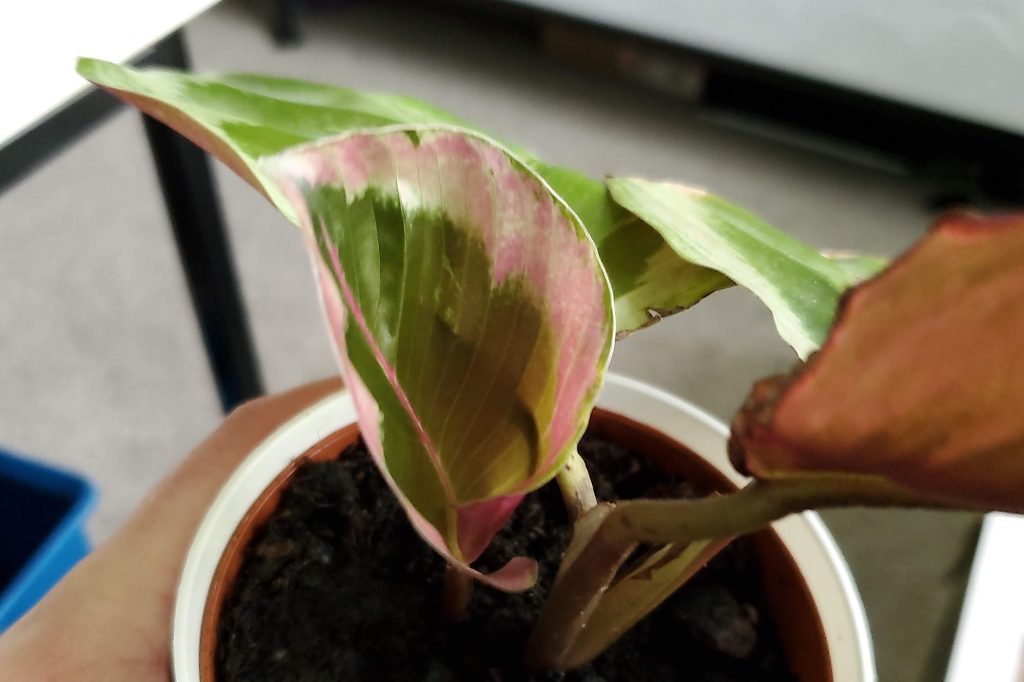
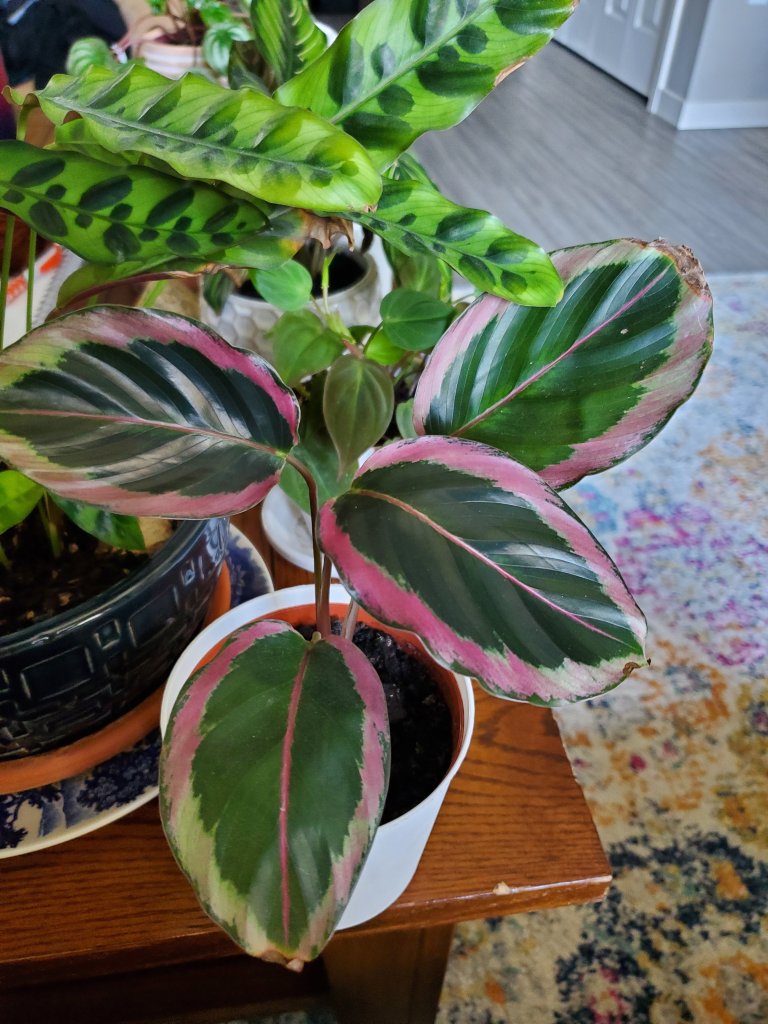
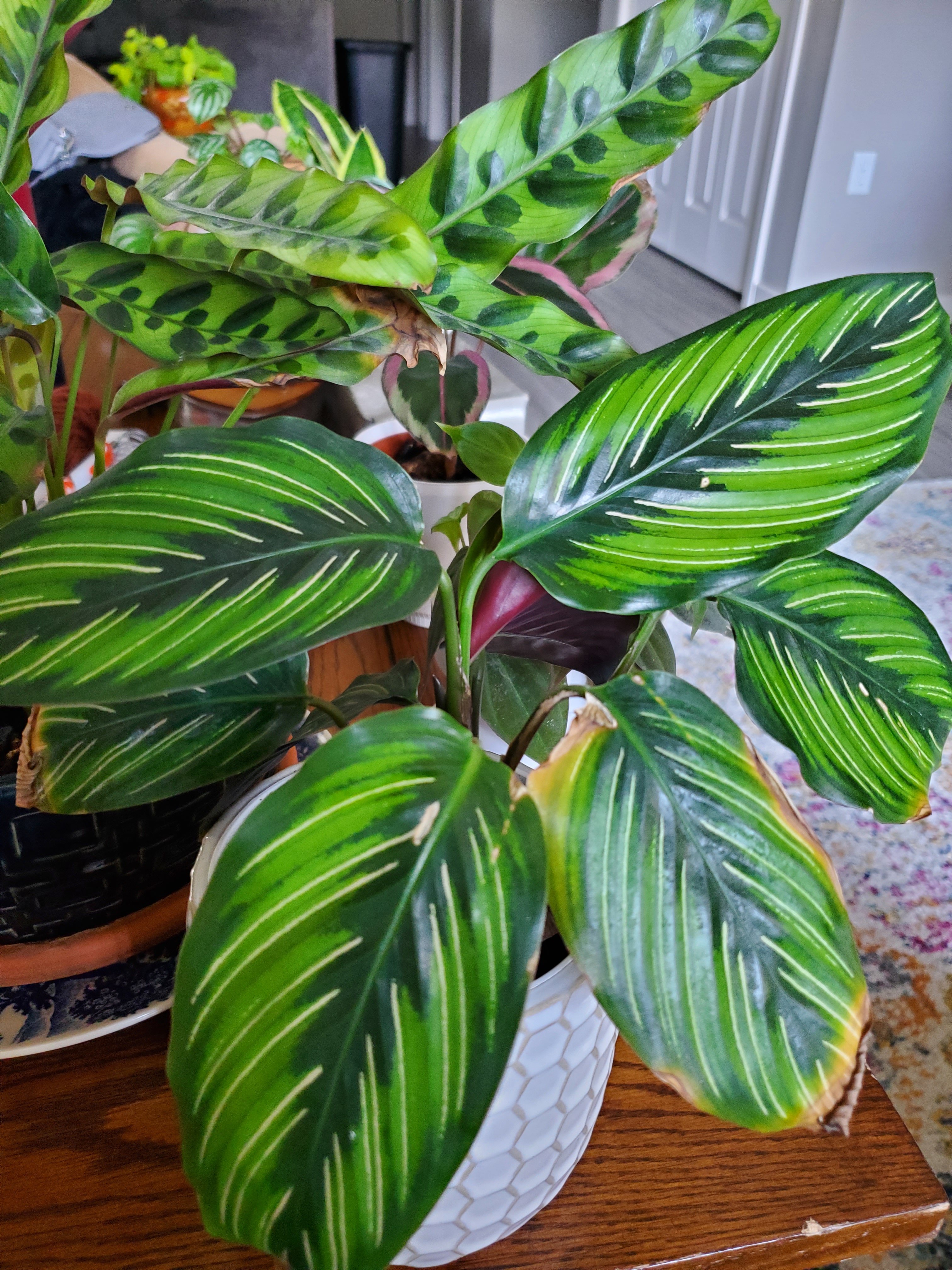
Since moving into this new apartment, all three of the calatheas I have collected have begun to do this miraculous thing I haven’t experienced from a calathea before: thrive. All of them, the lancifolia, the ornata, and the roseopicta have grown new leaves. The new leaves do not resemble burnt potato chips. I haven’t even been watering them with filtered water, and they still love their new lives. It makes me feel very accomplished as a plant parent, unlike my string of pearls who sees me as a deadbeat, but that is a different story.
Learning that in the right environment calatheas do actually thrive, rather than just being the teenagers of the plant world and crisping at the edges and all but telling you that you are the worst plant parent in the world, has done wonders for my self-esteem. If I can successfully cultivate calatheas, what else can I grow? (Not string of pearls, obvi.)
Thanks for reading! Until next time, don’t forget to water your plants. 🙂

 Laughing At Myself In An Empty Room
Love you, your plants, and your writing.
LikeLiked by 1 person